
The Biological Engine
Patented
methylglyoxal.
Engineered.
A proprietary mechanism engineered to completely shut down the evolvement of bacterial resistance.
01
Targeted cell wall disruption
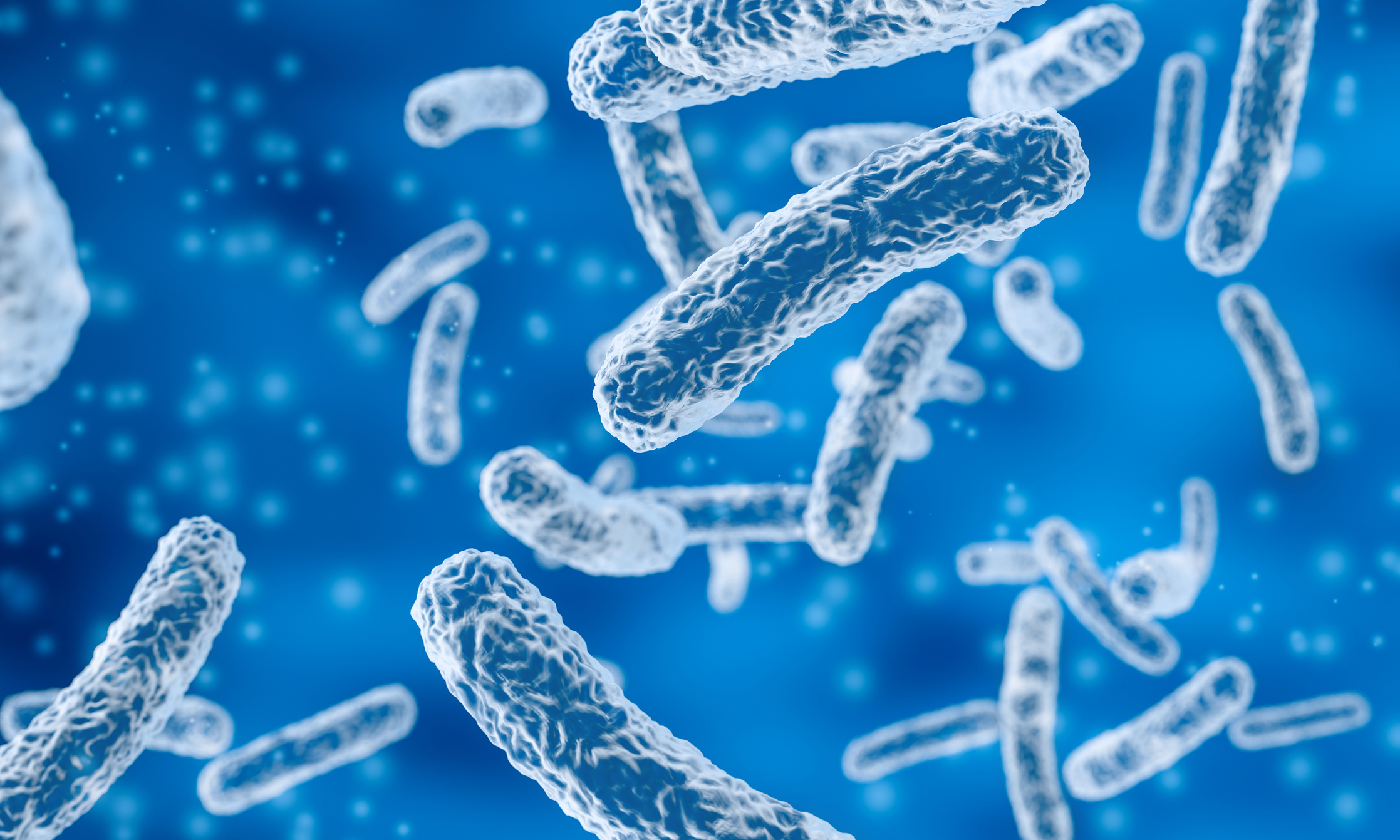
Methylglyoxal attacks the bacterial cell wall through a multi-site compositional mechanism that pathogens cannot route around.
02
No observed evolutionary resistance
Across two decades of independent study, no resistance has been observed - a property without parallel among conventional antibiotics.
03
Patented compositional structure
The engine is not a single molecule. It is a patented composition, protecting both the botanical matrix and the synthetic derivative.
De-risking matrix
Two parallel
assets.
Two independently patented compositions - one botanical, one synthetic - multiply delivery options and fundamentally de-risk capital across parallel clinical pathways. Both deploy the same patented composition of methylglyoxal.
Asset 01 · Botanical matrix
Lepto242
- Classification
- Botanical matrix
- Composition
- Patented natural composition of Medical Grade Manuka.
- Strategic advantage
- History of prior human use beginning in 1996, qualifying the 505(b)1 botanical pathway.
Asset 02 · Small molecule
Lgx242
- Classification
- Synthetic small molecule
- Composition
- Synthetic methylglyoxal derivative, engineered for precision delivery.
- Strategic advantage
- Highly targeted bio-defense delivery mechanisms, qualifying the QIDP / LPAD synthetic pathway.
Route 01
The
botanical
express lane.
The 505(b)1 botanical pathway, paired with a history of human use dating to 1996, delivers the speed and capital efficiency of a 505(b)2 - bypassing standard Phase 1 delays.
Estimated savings exceed ten million dollars and more than two years of clinical-trial overhead.
-
FDA Botanical Guidance
Codified regulatory framework for novel botanical therapeutics, distinct from the standard synthetic-drug pathway.
-
History of Human Use (1996)
Medical Grade Manuka has a continuous, documented history of human use since 1996, satisfying the prior-use requirement.
-
Express Lane equivalence
Together, these qualify Lepto242 for the speed and capital profile of a 505(b)2 application.
-
Precedent: Arikayce
Arikayce (Insmed Inc.) - an antibiotic with a nanocarrier for lung delivery - successfully bypassed Phase 1 trials under the same class of FDA framework.
Route 02
The
synthetic
fast track.
For Lgx242, two federal antimicrobial-resistance frameworks compound: QIDP under the GAIN Act grants five years of additional market exclusivity with automatic Fast Track status; the LPAD pathway scales trial burden to a limited, highly resistant patient population.
Together, these compress the approval timeline while preserving full commercial exclusivity.
QIDP · GAIN Act
+5 years exclusivity
Qualified Infectious Disease Product designation under the GAIN Act secures five additional years of market exclusivity on top of the base term, and automatically unlocks Fast Track review.
LPAD pathway
Limited Population Approval
Limited Population for Antimicrobial Drugs bypasses the three-thousand-subject statistical threshold: efficacy is proven on a small, highly resistant cohort, compressing timeline and cost.
Convergence
Strategic
asymmetry.
Biological efficacy fused with expedited FDA pathways creates a highly asymmetric upside. Three vectors compound around a single patented engine.
01
Deep biological efficacy
Methylglyoxal destroys superbugs via mechanisms that remain unopposed by known resistance pathways.
02
Regulatory fast-tracking
The GAIN Act, LPAD, and Botanical Guidance jointly bypass years of clinical delay and mitigate trial cost.
03
Capital efficiency
Multiple shots on goal via parallel routes ensure early funding achieves compounding milestones, de-risking sequential capital raises.
Catalyst
A $500K
capital bridge.
A foundation catalyst of five hundred thousand dollars de-risks the subsequent one-point-five-million-dollar raise, satisfying baseline FDA toxicity requirements and proving a safe, effective solution prior to Series A.
Efficacy validation
$60-80K · MicroChem Labs
In-vitro testing against the World Health Organization list of multi-drug-resistant bacteria, establishing a disease-agnostic efficacy profile.
Safety validation
$380-420K · Charles River
Formal preclinical toxicology program at Charles River Laboratories to satisfy the FDA prerequisite dossier for IND progression.
The catalyst, a $500,000 foundation, de-risks the next $1,500,000 - a $2.0 million capital raise that protects shareholder value through Series A.
Continue